Friday, April 20, 2012
Beyond Environmental Veganism
Wednesday, April 11, 2012
Contributor's Panel: Simple Steps
EcoBlog is very fortunate to have contributors who are quite knowledgeable on issues of environmental ethics and sustainability. To take advantage of this expertise, I've decided to start a new feature for this site called "Contributor's Panel." The idea is to pose an interesting and topical question to our contributors and let them share their insights.
The first question that I posed was something of a "softball" just to get the conversation rolling. My question was: "What are three simple steps that everyone can take to live more
sustainably?"
And here are the responses from our panel:
Frank Morris [Ecological Advisors]
1. Get Informed. Human Societies are driven by 4 main variables -- Policy, Investment, Competition, and Education. Present societies were born of past policies, past investments, past educational decisions and the competition between local human sub-cultures and the greater nation-state. Global Sustainable Society represents different policies, investments, and education-and a culture of sustainability will need to effectively compete with a presently dominant culture of exploitation. The 1987 BrundtlandReport -- Our Common Future -- developed the initial framework for global sustainability.
2. Get Connected. There are many groups involved with Sustainability. Even the Catholic Church has called for an ecological conversion in the cause of sustainability. Millions of Americans, and citizens around the world, belong to environmental organizations. What's missing presently is an aggregation of those members, and a clear game plan to drive policy, investment, and education to engage the present dominant culture of exploitation. By connecting, individuals within sustainable society can aggregate and demand policy, investment, and education in sustainable solutions. And those solutions will need to compete with a culture of exploitation.
3. Get Motivated. Sustainability provides without pollution. Sustainability effectively engages a culture of exploitation. Sustainability represents realistic hope for a better life for Earth's global citizens. Sustainability is great stuff.
Demosthenes Maratos [Sustainability Institute]
1. Go vegan. It has never been easier. There are alternatives in virtually every grocery store in North America, Web sites, discussion forums, books, magazines, videos and more all available to help you make the transition. It’s better for your health and for the planet. Most important, it’s the morally right thing to do. Being vegan is your everyday statement that things are not right as they are, that you are one more person who is standing up to be counted in opposition to the exploitation of animals. It is a refusal of a system that produces enormous profits at the expense of animals who are just as sentient as the family dog or cat.
2. Resist the cultural cues to desire unnecessary things. Consume less. Ask yourself: "Do I really need it?" Learn to be happy with less, you just may find that so many possessions were only complicating your life. You may find that fewer (but more special or unique) things trump many ordinary things. Sure, some material objects do make our lives easier, but they can't bring us happiness. That must be found from within.
"We must rapidly begin the shift from a thing-oriented society to a person-oriented society. When machines and computers, profit motives and property rights are considered more important than people, the giant triplets of racism, militarism and economic exploitation are incapable of being conquered. A nation can flounder as readily in the face of moral and spiritual bankruptcy as it can through financial bankruptcy." (Dr. Martin Luther King, April, 1967)
Nicole Giambalvo [Activist]
1. If you want to go green, go vegan. Or, at least limit your consumption of animal-based products. A plant-based diet isn't just good for animals and your health--it also has a positive impact on the environment. Reducing or eliminating animal-based products is one of the most powerful ways you can reduce your carbon footprint. Farmed animals and their byproducts are responsible for 32.6 billion tons of carbon dioxide per year, or 51 percent of annual worldwide human-caused greenhouse gas emissions, according to www.worldwatch.org.
2. Share. The amount of food products discarded by supermarkets and restaurants in the US is astonishing. There are locally based organizations that make a point to share discarded food products with those in need. The reflexive relationship between food waste and the social, economical and environmental oppressions within our society can be addressed through individual awareness and actions to eradicate poverty within low-income communities.
3. Recognize your accountability. Support reproductive justice. Industrialized countries with 20% of the world’s population are actually responsible for 80% of the accumulated carbon dioxide build-up in the atmosphere while Africa was only responsible for 2.5% according to https://outlook.molloy.edu/owa/redir.aspx?C=9d65bbb7dfd0475788236479203daa09&URL=http%3a%2f%2fwww.sistersong.net. Supporting safe and ethical reproductive health options in the Global South is important when addressing issues of world population increases. However, laying blame on nations which are much less responsible for carbon-dioxide buildup eschews the US and other industrialized nations' environmental responsibility.
Edward J. Thompson [Founder, Sustainability Institute]
1. Use a non-pesticide weed killer/fertilizer for your lawn. This saves money, promotes deeper root systems (which save water) and doesn't dump poison into our groundwater.
2. Stop buying bottled water. The plastic bottles are made with petroleum and are then shipped around the world using more petroleum.
3. Give more, expect less. With this motto, you will derive happiness from life itself, and not from consumption.
Peter Fallon [Professor, Media Ecology]
1. Humility. The overwhelming majority of what we consume, we don't really need. We eat more than we need. We buy things we don't use. We use things to fulfill "needs" that never existed until created and suggested to us by advertising. We throw things away rather than repairing them. We want a lot but even as we get what we want we want more. Our advertising industry puts us directly at the center of a very small universe created in our own image. We are Gods. And we should get over this.
2. Awareness. It is far too easy to be -- and to remain -- completely oblivious to the rest of the world in the information environment we've created for ourselves. It is too easy to be ignorant of both the suffering, exploitation, and deprivation of the developing world, and of our role in the creation and maintenance of that suffering. In order to become and remain aware it is necessary that we achieve a certain level of disconnection from the digital distractions and electric entertainments of our culture of commotion, confusion, and chaos.
3. Give a shit. The world's resources are not infinite. They are not evenly distributed across the Earth. Human societies have not developed at the same rates for reasons not necessarily of a given society's choosing. Powerful societies can, have, and do exploit weaker ones. People do suffer as we lead pretty fat and happy lives. Think about that. And let it bother you. Because it really should.
Elyssa Hopkins [Environmentalist]
1. Reuse/Upcycle everything. Avoid food packaging when you can, but when you can't, find other uses for it. For example, keep sauce jars to store leftovers instead of buying tupperware, and keep the plastic containers that salad greens and strawberries come in to bring baked goods to the next friend or family get together.
2. Invest in reusable shopping bags. Come on, they're less than a dollar and they pay for themselves in no time since most grocery stores give you a discount for using them. You have no excuse not to. Make the transition away from plastic!
3. Buy used. Furniture is a great example of something you can buy used. It'll be cheaper and even if it's not in perfect shape you can say it's "antique" or "rustic". You'll be conserving numerous resources, and if it's a wood piece it most likely has outgassed most of the formaldehyde that most wood furniture contains.
Tuesday, April 10, 2012
Save Seals by Eating Non-Canadian Seafood?

The annual Canadian Seal Hunt is well underway in the Gulf of Saint Lawrence and off Newfoundland. Hundreds of thousands of seals are being shot or clubbed to death. It's barbaric, pure and simple. With the hunt comes the Humane Society of the United States' curious annual call to boycott Canadian seafood until Canada ends seal hunting. The Humane Society doesn't care if you continue to eat seafood from other countries. And you can even resume eating Canadian seafood once their seal killing ends.
The Humane Society's message is clear. Some animals, seals in this case, deserve greater moral consideration than others. And by appealing to supporters with pictures of cute, baby seals they can rake in millions in donations. Sure, humans find seals cuter than say... fish, shrimp and lobsters, but which animals we perceive as cute should have no bearing on our ethical consideration of their interests. It is, of course, terrible that the seals are being killed. But it is also terrible that some use this tragedy to rake in donations, while encouraging the public to consume the less-favored animals in order to benefit the more-favored ones.
Too many animal protection organizations are promoting these sort of campaigns that actually encourage animal exploitation. Since 2003 for example, People for the Ethical Treatment of Animals (PETA) has called for a boycott of Kentucky Fried Chicken until KFC purchases chickens from producers that utilize controlled atmospheric killing (CAK). A method that amounts to gassing birds to death and one that PETA promotes as more "humane" and more profitable for chicken producers. When Kentucky Fried Chicken in Canada agreed to gassing chickens, PETA called off their boycott (in Canada). They then claimed a "historic victory" for chickens in their fundraising materials. The message they sent is clear: It is ethically acceptable to eat chickens that have been gassed to death.
Is it clear to anyone else that these mainstream groups are exploiting animals as a business model and none of it has anything to do with shifting the paradigm from animals as exploitable things to animals as sentient beings worthy of our ethical consideration?
Getting back to the seal hunt - the campaign against it has been going on for decades. It has not ended yet. Many mainstream groups, however, have made millions from the campaign over those decades.
Don't be misled. You can't make moral distinctions about different forms of exploitation and killing. There is no difference between seal fur or the skin of another animal. The Humane Society of the United States purports to be an animal protection organization. If they were truly interested in protecting animals, they should use their considerable resources and wealth to do something they have never done in all their 58 years in existence - make an unequivocal single message. That message should be:
Go vegan. Stop eating, wearing, consuming and otherwise using animals.
If you believe in promoting a peaceful, healthier, more sustainable and just world without the use of animals, support organizations who take a firm abolitionist stand against animal exploitation. Here are just a few:
What's For Lunch?
For many of us, what we eat and where we eat is a big issue. Fast food restaurants are all around us, offering the prospect of seemingly cheap food to fill our hungry stomachs. But is fast food really all that cheap? How much do you spend on eating out for lunch each day and what could you be doing instead with the money that you spend?
These are the questions that the Lunch Calculator seeks to answer. It's actually quite easy: just go to the site, plug in the numbers and see what your own results are. Then share your reflections with the rest of us!
http://www.feedthepig.org/lunchcalc
Saturday, April 7, 2012
Environmental Implications of the Meat Industry
Sure, being a vegan/vegetarian has loads of personal health benefits. Vegetarians and vegans are generally at a lower risk for heart disease, high blood pressure, and diabetes. I've even read studies swearing that people who avoid animal products have slimmer waistlines and an overall lower BMI than meat eaters. I could go on about the other health and beauty plusses of eliminating meat and such, but I'm thinking on a more global level. Wednesday, April 4, 2012
Ecological Conversion and the Common Good
I've been intrigued recently by the notion of "ecological conversion and the common good." I took a moment and googled those 5 words, in quotes, "ecological conversion and the common good".
One hit came up.
A friend asked me to present at Molloy College on alternative economic systems, and I offered the ideas of "the common good" from Rerum Novarum. I introduced to those present distributism, subsidiarity, solidarity, and the newest entry-ecology...I think I made a legitimate-reasonable presentation.
One of the students offered, "What are the odds of this actually happening."
I respect that question.
I told him, the odds change with what you do.
It's Easter week. Holy week. A week that should have changed the world completely....And yet, how much has the world really changed? Often, but not always, the wolf still hunts and eats the sheep. The strong still exploit the weak. God's Peaceful Kingdom of love and forgiveness, can seem illusive. In many places, it can seem a myth.
What I like about the idea of "ecological conversion" is that it could be embraced by all people. Solar roofs can be installed, energy can be used much more efficiently, materials can be recycled, the inestimable power of the wind can be cultivated, intermittent energy can be stored, water can be made clean and fresh with the energy from concentrated wind and solar energy, land can be remediated...Truly, a new means of provision could be born.
I think theirs an inherent logic and goodness to transitioning an economy from ecologic exploitation to ecologic cultivation.
But what are the odds?
To me, changing the odds are about 3 things...Ecologic policy, ecologic investment, and ecologic education.
Nature provides the example of symbiotic reciprocity. Flowers need bees, bees need flowers, and they both thrive for the existence of the other. But in the real world, their are predators, scavengers, and destructive parasites. Nature can be an unforgiving master.
So we as people have a choice. If their is individual knowledge, than people have their choices.
Cultivation or exploitation. Symbiosis or some other means of provision.
The Saddest Show on Earth
The Ringling Brothers and Barnum and Bailey Circus is making its way around the east coast at the moment. Having recently come through the New York area on their 11-month tour of the United States. It may be coming to a town near you very soon. Before you even consider buying a ticket to any animal circus, understand the magnitude of cruelty, exploitation and disregard for the interests of animals necessary to have them "perform" for your entertainment.Tigers, lions, bears, elephants, and other animals do not willingly or happily ride bicycles, stand on their heads, balance on balls, or jump through rings of fire. This isn’t their natural behavior, nor do they perform these and other tricks because they want to; they perform them because they're afraid of what will happen if they don't.
Unsuspecting parents planning a family trip to the circus don't know about the constant confinement and violent training sessions with ropes, chains, whips, bullhooks, and electric shock prods that animals endure. Undercover footage and heartbreaking photos obtained from even a casual Google search demonstrate the reality of what circus animals experience. In addition, as recently as November 2011, the Ringling Brothers Circus was fined $270,000 by the United States Department of Agriculture for violating the Animal Welfare Act on at least 27 different occasions between 2007 and 2011.
Even if reformed, however, the treatment of animals in entertainment by itself, does not address the underlying circumstances in which such forms of animal exploitation are considered acceptable. Circuses and other forms of animal “entertainment” exist because human consumers persist in creating demand for such things. To an industry that views sentient creatures as economic units – it is inevitable that such exploitation and violence will be viewed as acceptable. In a system where animals are considered the property of humans, even their most significant interests can (and are) eclipsed by the comparably trivial human interest of profit. Trying to "balance" the interests of a piece of property against the interests of a property owner is like playing in a rigged card game. Because the mechanisms in place are fundamentally unfair, it simply can’t be done.
It's 2012, and entertainment for children or adults need not come at the expense of animals, so don’t take part in it. Refuse to support animal circuses and the use of animals in entertainment. And while you're at it... if you believe in taking the interests of animals as seriously as say... the family dog or cat, then go vegan. Animals are not our property to use, abuse or consume.
Friday, March 30, 2012
Banning Fracking
That’s why I’m particularly disturbed by a plan that’s underway that would permanently scar some of the most pristine natural areas of the state and at the same time threaten the integrity of our state’s water supply. What is this nefarious plan, you may be wondering, and what sort of villains are behind it?
The plan is to open up large parts of upstate western New York to hydraulic fracking for natural gas. And the villains behind this plan—besides the usual suspects in the gas and oil industry—seem to be our own elected officials in both political parties.
What is Fracking, Anyway?
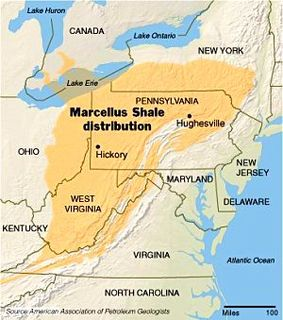
In case you’re not up on this issue, the Marcellus Shale is a black shale rock formation that extends from Ohio and West Virginia through Pennsylvania and into western New York. For years geologists have known that this shale formation contained large supplies of natural gas, but the depth and tightness of the shale made gas extraction difficult and expensive. Recently, however, the development of hydraulic fracturing—or fracking, as it is commonly called—has made it possible for corporate interests to get their greedy little paws on this gas, which potentially could mean billions of dollars in revenue for them. In order to drill for gas, shale gas companies come into an area, buy up drilling rights from landowners, and then raze large patches of land in formerly undisturbed natural areas. The process of hydraulic fracking itself injects thousands of gallons of water, toxic chemicals, and sand into horizontally-drilled wells under high pressure to release the natural gas from shale.
![]() |
| The Fracking Procedure |
- With each frack 80,000 pounds of toxic chemicals are leached into the land. Seventy percent of fracking fluids, furthermore, stay underground and are not biodegradable. Methane and other toxic chemicals used in fracking can then leach into groundwater, posing a huge health risk for those who depend upon this water (and please remember, millions of people in New York City depend upon drinking water from reservoirs that potentially could become contaminated).
- Recent studies suggest that toxic chemicals released into the air during the process of fracking may pose a serious health risk to human beings.
- Fracking activities can cause seismic faults that can lead to earthquakes (as was the case recently in Ohio).
- The chemicals used in shale drilling may be linked to increases in cancer rates found among those who live near drilling sites.
But what can any one of us do in the face of the millions of dollars that the gas and oil industries have available to distort public opinion and buy compliance from our elected officials? Individually, we can’t very much. But collectively we have the power to sway public opinion, force our elective officials to work for the common good, and prevent further degradation to our natural environment.
So here are a few simple things you can do if you care about this issue:
- Inform yourself about the issue, so you understand fully the price that all of us will have to pay if fracking is permitted in New York State. A good place to start is at the No Fracking site, which contains as much information as you could ever want to know about this issue in addition to many useful links.
- Sign an on-line petition to persuade Governor Cuomo to ban fracking in New York State. Or even better, call the Governor’s office directly to voice your opposition. The Working Families Party has a hotline that makes it easy for you to do this.
- Talk to your friends and family about this issue and get them involved. Remember, collectively we have a voice and the more people who commit to a cause, the greater the likelihood of success.
So if you really want to stop the environmental degradation and human suffering that comes from gas and oil drilling, then please,
- support the concept of renewal energy both as a personal choice and as public policy.
Saturday, March 24, 2012
Population, Continued.
You don't have to take my word for it, though. I found this fabulous site from the University of Michigan that lays out the numbers in a way that just about any idiot can understand. Check it out:
Population Growth Over Human History
The rate that our species is growing is simply unsustainable and has to be reduced. This can be through personal choices that all of us can make (choosing not to have children or to limit family size), but it also has to be done through public policy initiatives (public funding for birth control and support for Planned Parenthood, for example).
Limiting population size won't be enough to turn back the clock on the harm that our species has caused the planet. We also need to live much more sustainably. But unless we get a handle on population growth, everything else that we try to do to live more sustainably will probably be futile.
Let me know what you think about this issue...
Monday, March 19, 2012
Creating Something Special
That's not to say that I'm not fearful about what we're doing to our planet. Climate change has been having an impact on the Northwest, just as it has on the rest of the country. But coming from a progressive part of the country, I've also seen what can happen when committed people work together to make a difference. Believe me, change can happens. Sometimes it happens at a maddeningly slow pace, but it does happen.
I was doing an outdoor art class recently with a group of fourth graders and I was totally blown away by how important they thought caring for the environment was. These kids have grown up understanding that we are all part of nature and that you can't trash the planet without it having a negative impact on all of us. That gives me cause for hope in the future.
That's why I agreed to be part of Ecoblog. I think that when people really begin to understand the problems facing our planet and are offered more sustainable options for living out their lives, they will respond in positive ways.
The new Ecoblog that is currently under construction will offer simple, practical steps that everyone can take to live with less of an environmental impact. Please let us know what you think and offer your own suggestions about what you'd like to see on this site.
Popular Posts
-
Mike's Original Post I’ve been having a debate recently with some of my more purist vegan friends about whether a 100% vegan diet i...
-
More and more people are becoming vegetarian as a result of their belief that animals shouldn’t be mistreated on factory farms, or that ...
-
As the Thanksgiving holiday approaches and millions of Americans prepare to dine on millions of turkeys, I sat down to write a blog post a...
-
" Homo Consumens is the man whose main goal is not primarily to own things, but to consume more and more, and thus to compensate for ...
-
The Chinese currently have a population of 1.3 billion people. The U.S. has a population of 300 million. The average ecological footprint...
-
Imagine a species that is so fecund that it spreads to every habitable corner of its ecosystem. Then imagine that same species as it voracio...
-
One of the things that we try to promote on this site is the adoption of voluntary simplicity as a way of life. Our goal is not to try...
-
As a teacher of ethics for over 20 years now, I’ve always been interested in what sorts of actions students view as morally wrong. I ty...
-
When I drive through upstate New York, I’m always in awe of the natural beauty of the state of which I am proud to call myself a citizen. ...
-
Ecologist Richard Conniff has written an interesting opinion piece addressing the question of whether animals are only important becaus...