Friday, March 30, 2012

Banning Fracking

When I drive through upstate New York, I’m always in awe of the natural beauty of the state of which I am proud to call myself a citizen.  I’m also greatly appreciative of the fairly stringent environmental regulations of New York State that have created a reservoir system in which water is so pure that it doesn’t even require filtration.  It’s actually the largest unfiltered surface water supply in the world!  Very few states in the country can boast that kind of achievement.

That’s why I’m particularly disturbed by a plan that’s underway that would permanently scar some of the most pristine natural areas of the state and at the same time threaten the integrity of our state’s water supply.  What is this nefarious plan, you may be wondering, and what sort of villains are behind it? 

The plan is to open up large parts of upstate western New York to hydraulic fracking for natural gas.  And the villains behind this plan—besides the usual suspects in the gas and oil industry—seem to be our own elected officials in both political parties. 

What is Fracking, Anyway?
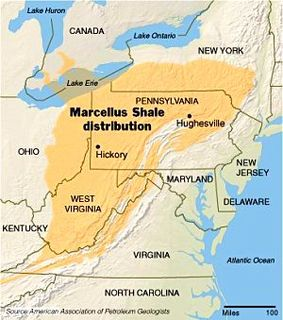
In case you’re not up on this issue, the Marcellus Shale is a black shale rock formation that extends from Ohio and West Virginia through Pennsylvania and into western New York.  For years geologists have known that this shale formation contained large supplies of natural gas, but the depth and tightness of the shale made gas extraction difficult and expensive.  Recently, however, the development of  hydraulic fracturing—or fracking, as it is commonly called—has made it possible for corporate interests to get their greedy little paws on this gas, which potentially could mean billions of dollars in revenue for them. 

In order to drill for gas, shale gas companies come into an area, buy up drilling rights from landowners, and then raze large patches of land in formerly undisturbed natural areas. The process of hydraulic fracking itself injects thousands of gallons of water, toxic chemicals, and sand into horizontally-drilled wells under high pressure to release the natural gas from shale. 
The Fracking Procedure
Dangers of Fracking
While this process does indeed have the potential to extract large amounts of natural gas, there are some significant problems associated with fracking that have led most environmental groups to condemn the practice.
  • With each frack 80,000 pounds of toxic chemicals are leached into the land.  Seventy percent of fracking fluids, furthermore, stay underground and are not biodegradable.  Methane and other toxic chemicals used in fracking can then leach into groundwater, posing a huge health risk for those who depend upon this water (and please remember, millions of people in New York City depend upon drinking water from reservoirs that potentially could become contaminated).
  • Recent studies suggest that toxic chemicals released into the air during the process of fracking may pose a serious health risk to human beings.
  • Fracking activities can cause seismic faults that can lead to earthquakes (as was the case recently in Ohio). 
  • The chemicals used in shale drilling may be linked to increases in cancer rates found among those who live near drilling sites.
These are just a few of the many environmental and health risks associated with hydraulic fracking.  Now, you will hear representatives from the oil and gas industry claim that the dangers of drilling for gas are overstated.  The industry, furthermore, has recently spent huge sums of money to convince people in the areas that could be affected by drilling that the procedures that they have in place for extracting gas are perfectly safe.  Of course, these were the same people who claimed that there was no possibility of oil spills in the Gulf of Mexico, and we are still paying the price for their lies. 
So What Can We Do?
As I write this, New York’s Governor, Andrew Cuomo, is deliberating about whether to allow fracking to go ahead in New York State.  The signs don’t look positive:  Cuomo and Senate Majority Leader Dean Skelos have already blocked a proposal for an independent health impact study of hydraulic fracking and are under continuous pressure from gas and oil interests to allow them to rape and plunder the natural resources of our state.     

But what can any one of us do in the face of the millions of dollars that the gas and oil industries have available to distort public opinion and buy compliance from our elected officials?  Individually, we can’t very much.  But collectively we have the power to sway public opinion, force our elective officials to work for the common good, and prevent further degradation to our natural environment. 
So here are a few simple things you can do if you care about this issue:
  • Inform yourself about the issue, so you understand fully the price that all of us will have to pay if fracking is permitted in New York State.  A good place to start is at the No Fracking site, which contains as much information as you could ever want to know about this issue in addition to many useful links.
  • Sign an on-line petition to persuade Governor Cuomo to ban fracking in New York State.  Or even better, call the Governor’s office directly to voice your opposition.  The Working Families Party has a hotline that makes it easy for you to do this. 
  • Talk to your friends and family about this issue and get them involved. Remember, collectively we have a voice and the more people who commit to a cause, the greater the likelihood of success.
Of course there are alternatives to drilling for gas and oil that could eventually supply most of our energy needs in the future, make us energy independent (i.e., no more wars for oil), and have almost no environmental impact.  These are renewable energy sources like solar, wind, hydro, and geothermal.  As the price of gas and oil continue to rise—as they inevitably must with world demand increasing annually—these alternative energy sources will become more economically viable and will have the potential to transform our planet. 

So if you really want to stop the environmental degradation and human suffering that comes from gas and oil drilling, then please,
  • support the concept of renewal energy both as a personal choice and as public policy.

Saturday, March 24, 2012

Population, Continued.

Overpopulation is one of my obsessions.  That may be because I live in one of the most crowded cities on the planet, but it's also because I've seen what human population expansion has done to wildlife and to ecosystems around the country.  Sure, there are people who will tell you that human population growth is slowing down, but I think that at 7 billion people, the planet is already beyond sustainable carrying capacity.

You don't have to take my word for it, though.  I found this fabulous site from the University of Michigan that lays out the numbers in a way that just about any idiot can understand.  Check it out:

Population Growth Over Human History

The rate that our species is growing is simply unsustainable and has to be reduced.  This can be through personal choices that all of us can make (choosing not to have children or to limit family size), but it also has to be done through public policy initiatives (public funding for birth control and support for Planned Parenthood, for example). 

Limiting population size won't be enough to turn back the clock on the harm that our species has caused the planet.  We also need to live much more sustainably.  But unless we get a handle on population growth, everything else that we try to do to live more sustainably will probably be futile.

Let me know what you think about this issue...

Monday, March 19, 2012

Creating Something Special

I'm really happy to be part of something positive and life-affirming like EcoBlog.  Sometimes it seems as though all there is on the web is angry, ugly, divisive ideas that leave you feeling like there's absolutely no hope for the future.

That's not to say that I'm not fearful about what we're doing to our planet.  Climate change has been having an impact on the Northwest, just as it has on the rest of the country.  But coming from a progressive part of the country, I've also seen what can happen when committed people work together to make a difference.  Believe me, change can happens.  Sometimes it happens at a maddeningly slow pace, but it does happen.

I was doing an outdoor art class recently with a group of fourth graders and I was totally blown away by how important they thought caring for the environment was.  These kids have grown up understanding that we are all part of nature and that you can't trash the planet without it having a negative impact on all of us.  That gives me cause for hope in the future. 

That's why I agreed to be part of Ecoblog.  I think that when people really begin to understand the problems facing our planet and are offered more sustainable options for living out their lives, they will respond in positive ways. 

The new Ecoblog that is currently under construction will offer simple, practical steps that everyone can take to live with less of an environmental impact.  Please let us know what you think and offer your own suggestions about what you'd like to see on this site.

Friday, March 9, 2012

The Roots of Our Consumerism


"Homo Consumens is the man whose main goal is not primarily to own things, but to consume more and more, and thus to compensate for his inner vacuity, passivity, loneliness and anxiety….He mistakes thrill and excitement for joy and happiness and material comfort for aliveness; satisfied greed becomes the meaning of life, striving for it a new religion. The freedom to consume becomes the essence of human freedom."

Erich Fromm. “The Application of Humanist Psychoanalysis to Marx's Theory" in Socialist Humanism: An International Symposium. New York: Doubleday, 1965.


I like to think that I’m totally immune to the lure of consumerism. After all, I’ve spent the past 15 years lecturing students on the importance of voluntary simplicity both as a means to prevent further environmental degradation to our planet, but also as a way to find greater happiness in life.

That latter benefit of reducing consumption is often lost on 20-something-year-olds who have grown up fervently believing that meaning and happiness in life are connected to the ability to buy whatever one wants, whenever one wants, whether one has the funds to do so or not. I’ve found that, even when I show these students hard data from the field of human psychology clearly demonstrating that the “need to always have more” is linked to personal unhappiness and that the happiest people on the planet are actually those who are the most immune to the lure of consumption, they simply don’t buy it (no pun intended).

But at least I have the satisfaction of knowing that I am setting a positive example for my students, right? After all, I’m living in a house that is much smaller than I could afford, I drive a 17 year old car (by choice), rarely eat out in restaurants, and generally wear clothes till they fall apart (literally!). On the surface of things, I am the poster boy for the voluntary simplicity movement.

And yet, deep in the marrow of my being, I am as easily seduced by the lure of American consumerism as the most fashion-conscious student in my environmental ethics class. Just recently, for example, I found myself wanting to replace the perfectly adequate cell-phone that I had been using for about four years with a smart new Iphone. The new phone cost hundreds of dollars more than the old phone did and that new plan that I had to take out to get it was also more expensive, but at least I could now say that I had the smartest, most sophisticated, most stylish cell phone on the market. And I was ever so happy—that is, until I saw a colleague of mine with the new Iphone 4s with even cooler features than the model I had. And then I found myself becoming envious and thinking that my own Iphone just didn’t seem quite as special any more.

Then there’s the issue of my car. I am adamant about the fact that I will not buy a new car until the one I have—a 1995 Toyota Corolla—starts to become unreliable or cost more to maintain than it is worth. 17 years later, I still have the same car, and it is still chugging along perfectly fine. There are absolutely no mechanical issues with the car, but it certainly doesn’t provide as smooth and quiet a ride as a new car would, and lately, the paint on the roof of the car has begun to wear off, making the car look rather shabby. In fact, I’ve been told that I have the ugliest car on campus, and that’s probably true: I doubt that even the most cash-strapped freshman would ever be caught dead driving a car as aesthetically challenged as mine. 

Now, when someone asks me about my car, I tell them proudly that I’ll be damned if I ever get suckered into buying a new car before I absolutely need one. But, in fact, I’m starting to feel just a little self-conscious about being seen driving a car like mine or parking it at the Mall amidst all the shiny new SUVs that people on Long Island tend to own. And this year, I’ve even begun fantasizing about getting a new car—not anything excessive mind you, but something small, cute, and fun like a Honda Fit. Every time I see someone driving one of these cars, I almost automatically think to myself: “Why should they get to drive a nice new car, while I am forced to drive this piece of crap! “After all,” I reason to myself, “I am a college professor and do have a reputation to maintain.”

So you see, although I would like to believe that I am impervious to the insatiable desire for more than I need, this really isn’t the case. I am as much a part of the species homo consumens as anyone. The only difference is that I’ve read enough to know what the root causes of our consumerist desires are. I think that these causes are threefold:

1) Contemporary Americans have come to identify who they are as human beings with what they own. The more trendy things I own, then, the more worthy I am as a human being. Conversely, if I live in a modest house, don’t wear the latest clothes, and don’t drive a nice car, then something is wrong with ME as a human being. In 21st century America we are judged, not by the “content of our characters,” but by the stuff we possess.

2) We have been convinced by modern advertising that we should have as much as our neighbors do. In the past, however, our neighbors could only afford to buy things if they saved for them. But the advent of the credit industry means that ordinary people can buy things they don’t have the actually money for. We don’t know, for example, that our neighbors really can’t afford to live in the McMansion that they recently built or drive their new Lexus, but we think they can, and that makes us feel inferior. So we too are compelled to take out loans and live well beyond our means, just to “keep up with the Jonses.” 

3) In the absence of authentic religious belief, Americans have made a religion out of consumption. If we really believed in God and were convinced that this life is not all that there is, having so much stuff wouldn’t mean quite as much to us. After all, how could owning even the most sophisticated things in the world—fancy jewelry, designer clothes, etc.—ever compare with what we have to look forward to in the next life? Objectively, then, if Americans really believe in anything, it is that salvation comes from buying power—the ability to satisfy our insatiable desires with more and more stuff. God is dead, but at least we have Walmart—or Neiman Marcus, if you prefer—to provide us with ultimate meaning in life.

These are just a few thoughts that came to me as I reflected on the roots of our consumerism in the United States. I’d love to hear what you think about this. Is the problem of consumerism really as bad as I think it is (do you personally fall victim to it?)? And what do you think that the ultimate root of this need to always acquire more and more is?   

Monday, January 9, 2012

Ornish Diet is #1 for Your Heart

There are many good reasons for adopting a vegan diet: it's good for the planet, it's good for animals, and, now there is conclusive evidence that it's good for your heart as well. Dr. Dean Ornish, one of the world's leading experts on heart disease, has been promoting a plant-based diet as a cure for the diseases of affluence that afflict Americans since 1990. Recent studies now conclusively rank Ornish's approach as the optimal one for preventing heart disease.

See the results in U.S. News and World Reports

According to the America Heart Association, the United States currently spends almost 300 billion dollars each year to treat heart disease. But what if, instead of risky surgery and expensive medicine, the cure for what ails us is as simple as making some sensible changes to our eating habits?

There are those who claim that plant-based diets, like the one advocated by Ornish, are impractical, because Americans simply won't end their love-affair with artery-clogging animal products. The simple fact, however, is that most coronary patients are never even provided with the option of trying to use diet and/or exercise as a way to cure their health problems. The medical-industrial establishment has a vested interest in promoting medication and surgery to treat heart disease, because that's where the money is.

The China Study and Ornish's own studies during the past twenty years conclusively prove that adopting a plant-based diet can virtually eliminate the risk of heart disease in most people. This is just one more reason, in a long line of very good reasons, to begin to explore the benefits of a vegan diet for you own life.

Friday, December 9, 2011

Calling Out Their Lies

Every now and then a real hero comes along who refuses to cave in the face of unreasonable authority and sets an example for the rest of us who are too cowardly or indifferent to fight for justice. In this case, the hero of the hour is 21-year-old Abigail Borah, who publicly called out the lies of the United States government at a recent climate conference in Durban, South Africa.

As you may recall, in 1997 the United States government almost single handedly derailed the Kyoto Protocols, the United Nations climate agreement, that might have decreased the amount of carbon in the world's atmosphere. Since 1997, our government--whether led by Republicans or Democrats--has done all it could to dismiss the threat of climate changes, even in the face of overwhelming scientific evidence.

At the Durban conference, Todd Stern, the Obama administration's duplicitous negotiator, was doing his damnedest to show the world that the United States would continue to equivocate on this issue. That's when Ms. Borah, a representative of the International Youth Climate Movement, stood up and courageously interrupted the proceedings.

"I am speaking on behalf of the United States of America," Ms. Borah proclaimed, "because my negotiators cannot." She then went on to do what should have been done by the Obama administration representative and called for "a fair, ambitious, and legally binding treaty" on climate change.

Occupy Wall Street has revealed that, if there is to be any change for justice in the United States, it is going to have to come from young Americans who are willing to fight for those causes that the rest of us are not. Now this inspiring young student from Middleburg College has shown that the same is true in the international arena as well. The wrinkled generations--and I count myself, unfortunately, as part of this group--have failed the world and have condemned future generations to live on a planet that may very well prove inhospitable to them. It is our greed, selfishness, and apathy that has caused the world's problems; and now we need a new generation free of wrinkles to lead the world back on the right path.

Just as I'm proud of the young men and women of Occupy Wall Street for the work that they've been doing to highlight the problem of economic inequality, I am also damn proud of this young woman for speaking out loudly, clearly, and compassionately about the issue of climate change. It gives me some small hope for the future of our planet.

I strongly encourage you to listen to what she has to say:

Friday, November 25, 2011

A New Kind of Corporate Model

I hate Black Friday. I hate how it turns our holiday season into an excuse for conspicuous consumption. I hate the kind of people who would spend all night hanging out at some stupid mall in the hopes of getting a sale on some idiotic item that they probably didn't need anyway. But most of all I hate what the consumeristic mindset represented by this day has done to our planet--a planet, basically, that we are destroying in our never-ending lust to acquire more and more stuff.

That's why I was so delighted to wake up this morning and find this ad from Patagonia staring me right in the face.

Patagonia, in case you don't know, is a fairly high-end American outdoorsy clothing store, that probably has been doing fairly well during the recent economic crisis, because its clothing items appeal to the kinds of affluent individuals who can easily afford to buy them. They didn't need to run this ad, but they did it anyway, and, for that, I think they deserve no small amount of credit.

The "Don't Buy This Jacket" ad is part of Patagonia's Common Threads Initiative that encourages consumers not to buy things they don't need, to keep the items they buy for as long as possible, to repair them when they are are broken, and to recycle items that are hopelessly worn out, rather than just throwing them out.

Why is Patagonia going through all this bother when a campaign like this probably won't increase their sales in the short-term significantly? I'm going to give the company the benefit of the doubt and assume that, unlike at most American companies, the people who run Patagonia actually give a damn about the future of the planet. Maybe they have children or grandchildren and don't like the idea of bequeathing them a planet that will be much less hospitable than the one we are already inhabiting.

I'd also like to think that maybe Patagonia is on to something that other American and multinational companies just don't get--namely, that the pursuit of short-term profits at all costs is not a sustainable business model. In a time when many people, including those who make a decent living, can no longer afford to squander their resources on crap they really don't need, it may be time for companies to start producing items that are so well-made that they can be used year-in and year-out without replacement, and to charge prices that reflect the high-quality of this craftsmanship.

Ultimately, this sort of business model would be good for the consumer (less money spent over the long-haul), good for businesses (they still would make a decent profit from selling fewer items at a higher cost), and good for the planet (less crap in our landfills).

Of course, a consumption tax would also have the same benefits, but without insuring that the items produced would ultimately be of a high quality. Besides, no one in government today has balls to propose anything even remotely like a consumption tax. So until we have a third party that actually is beholden to the interests of the American public, we need to speak as consumers with every purchase that we make, rewarding businesses like Patagonia that try to do the right thing for the planet and punishing those that don't.

I don't need to buy a winter coat any time soon: the two I have are about 10 years old and doing just fine, thank you. But when I finally break down and decide to buy a new coat, you can be well-assured that I will check out what Patagonia has to offer...specifically because of this campaign.

Perhaps you should consider doing the same.

Tuesday, November 1, 2011

The Ultimate Invasive Species

Imagine a species that is so fecund that it spreads to every habitable corner of its ecosystem. Then imagine that same species as it voraciously consumes all of the natural resources within its own ecosystem to the point where many of these resources are in danger of immanent collapse.

Then go one step further: imagine this same species—the ultimate carnivore—as it preys on all the other inhabitants of its ecosystem, threatening the very extinction of many of these species.

If such a predator was, let’s say, the Asian carp, there would be no end to discussion about how to limit its spread and manage the harm that it is causing to the Mississippi and potentially to the Great Lakes region. In fact, we would declare war on the Asian carp, calling it an invasive species, and investing as many resources as necessary to reducing its numbers. We’d have a national program of carp birth control with the sole aim of correcting some of the damage that this insidious predator has already inflicted upon the fragile ecosystem of the Mississippi.

In fact, we already have such a plan to deal with the Asian carp, and there is very little outcry about it, because we all recognize this creature for what it is—an obnoxious invasive predator that must be stopped at all costs.

But there’s another invasive species that’s even more obnoxious than the Asian carp, because it threatens, not just a specific habitat, but the continued existence of all life on this planet. If you haven’t guessed by now, the species that I’m talking about is none other than our own human species.

And our species has just reached a dubious milestone. This week the United Nations estimates that humans will reach the seven billion mark. And what does this landmark mean for the planet, you might ask? As the Center for Biological Diversity writes, "The human race is not only the most populous large mammal on Earth but the most populous large mammal that has ever existed. Providing for the needs and wants of this many people — especially those in high-consumption, developed countries — has pushed homo sapiens to absorb 50 percent of the planet’s freshwater and develop 50 percent of its landmass. As a result, other species are running out of places to live.”

Human population in fact has doubled during the last 50 years, leaping from three billion in 1950 to six billion today. The problem gets even worse when one considers that by the end of the century, the human race is predicted to add two billion more members to it’s ranks. That’s nine billion people on a planet that can barely sustain the seven billion inhabitants we already have.

And what does this projection mean for the future of our planet? It means more ecological stress, more deforestation, more mass species extinctions, more global warming, more pollution, more disease, and more famine. Life
, in short, by the end of this century, will not only be far less habitable for other species, it will become far less hospitable for our own as well. It’s already estimated that approximately 900 million people around the world experience food insecurity or chronic malnourishment. That number will only get worse as our human population increases.

So what do we do to solve this problem—if, indeed, it can be solved at all at this point? Economic development and the education of women have already done a considerable amount to reduce population rates in the developed world, and there’s some evidence that programs like these are having some positive effects in the developing world as well. But that’s simply not good enough at this point.

Along with economic development and education, therefore, we also need a global population control program that includes access to birth control and support services for women around the world. And more than that, we need a cultural shift whereby we begin to see the wanton procreation of our species as the ultimate sin.

“More trees, fewer people,” should be our new mantra. And those who opt not to have children at all, for whatever, reason, should be celebrated and become role models for the rest of us. We might even consider giving tax breaks to those noble souls who are helping to solve this problem of overpopulation by refraining from spawning offspring—gays and lesbians, clergy, and young couples who simply opt not to have kids.

This may sound a bit extreme, but is it any more extreme than simply standing by while our species destroys what is left of the planet? Is it any more extreme than condemning future generations to a continually declining level of existence in which there will likely be global wars fought to control things we now take for granted, like water?

The Center for Biological Diversity is trying to do its part through a condom campaign aimed at making people aware of the ultimate costs of our profligate population growth. I think this campaign should be supported morally and economically. The Pope may not approve of this kind of campaign, but, in fact, he’s already doing his part at population control. Now, the rest of us need to start doing ours.


Saturday, October 1, 2011

If You Eat Their Food, It Will Kill You!

Apparently, Big Ag is unhappy with the way it's being portrayed in the media. It seems that the Egg Board, the National Milk Producers Federation, and the National Pork Board have started a new public relations campaign, called the U.S. Farmers and Ranchers Alliance, to convince Americans that their nasty, animal and planet-killing food is safe to eat.

Don't believe a word they say. All you have to do is watch 15 minutes of the fabulous film, Food Inc., to know that these gross bastards couldn't give a rat's ass about food safety, animal welfare, or the future of the planet. All they care about is their fat, filthy profits and will do anything to maximize them. If children happen to die as a result of eating the crap that corporate farms and feedlots produce, so be. We wouldn't want anything to stand in the way of share-holders profits, now would we?

Watch Food Inc., read Eric Schlosser's Fast Food Nation or Michael Pollan's The Omnivore's Dilemma. Inform yourself about what the greedy multinational corporations are doing to our food supply. And then take steps to change your own eating patterns by going vegetarian, eating local and (ideally) organic, and checking out your local farmers markets. It may cost you a bit more to eat each week, but the life of your health is certainly worth it.

Saturday, September 3, 2011

Consumerism

Here's a video I found of my old pal, Dr. Mike Russo, Director of the Molloy College Center for Social and Ethical Concerns, talking about the American consumerist mentality:


Russo, of course, is correct in his identification of consumerism as a moral evil, but he's probably a bit too optimistic about voluntary simplicity as the solution to this problem. I honestly don't think that we Americans will ever get over our lust to consume....Not until the inevitable economic collapse occurs, that is!

Popular Posts